Current ADK Great Camp Listings
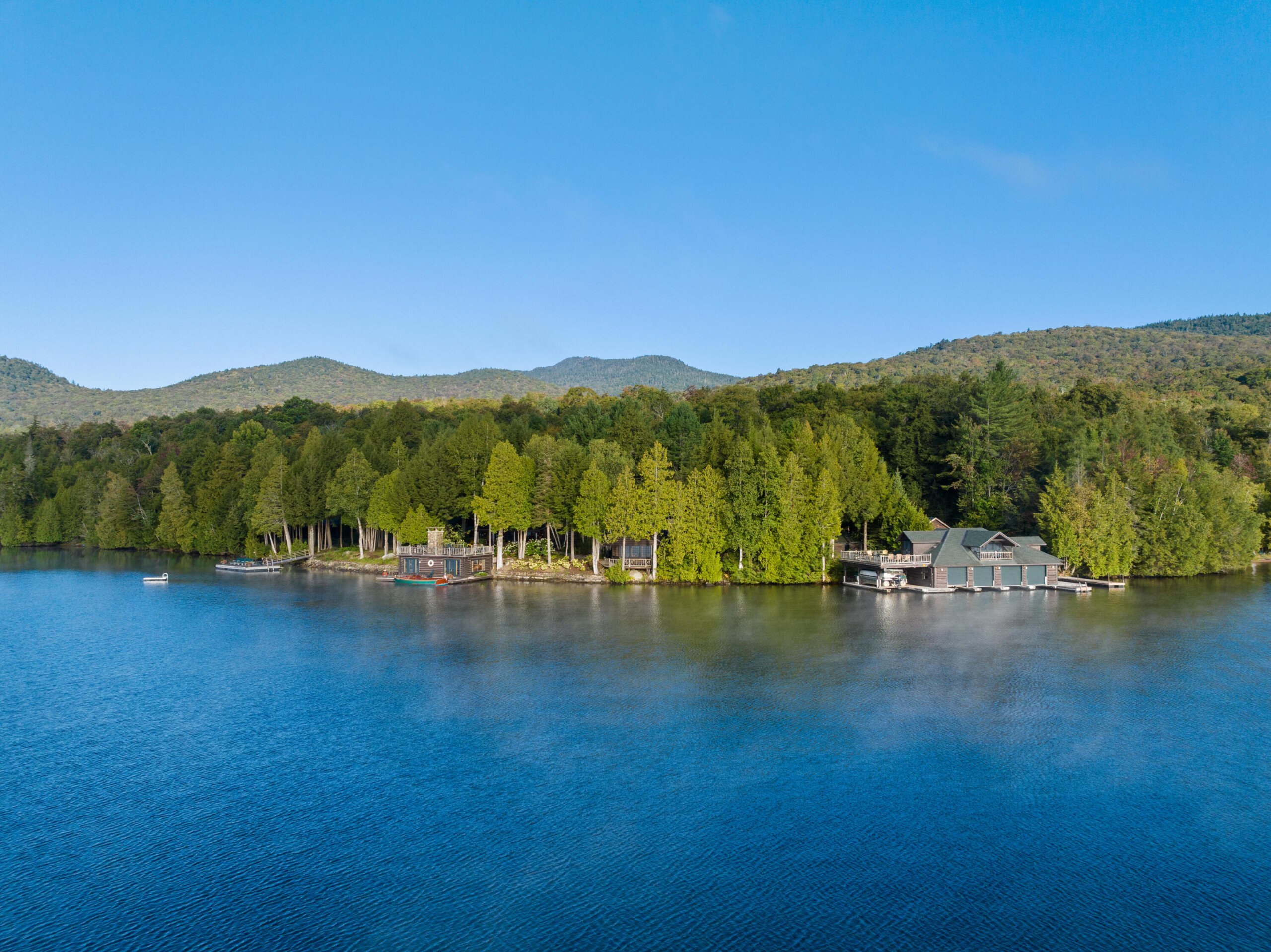
12 George & Bliss Lane, Pier 238, Lake Placid, NY 12946
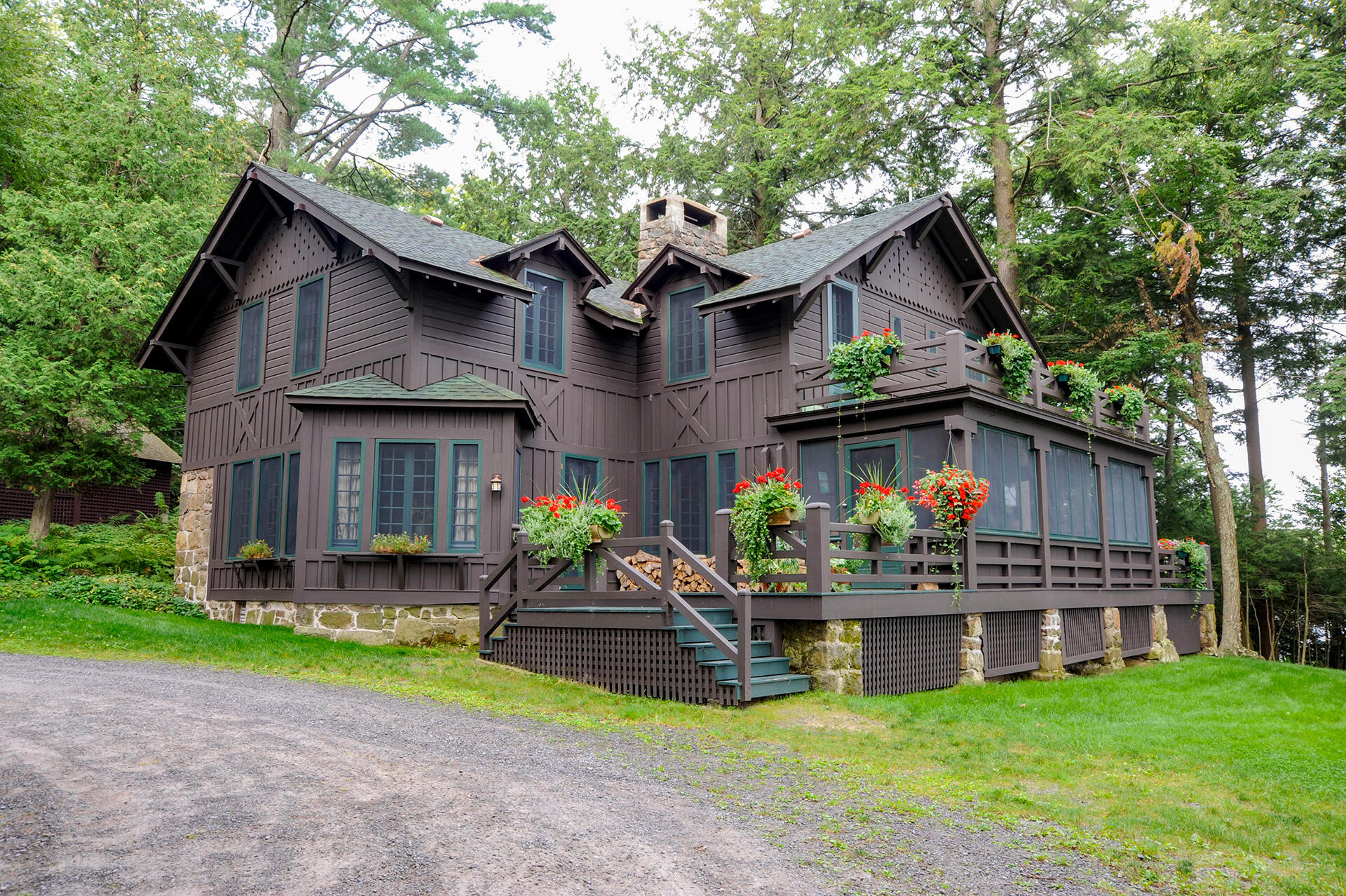
26 Hemlock Ledge Road, Tupper Lake, NY 12986
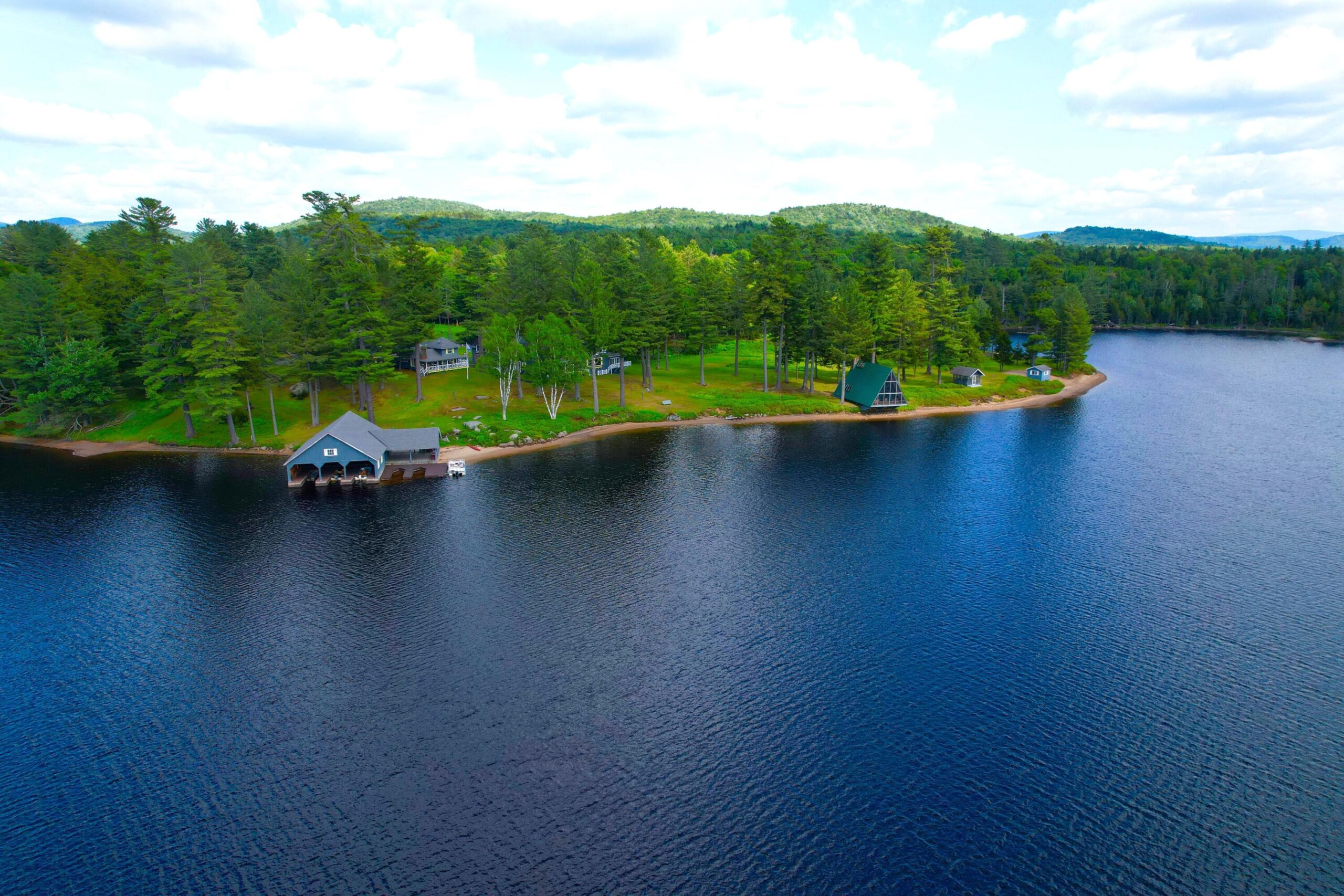
1594 Elk Pond Road, Long Lake, NY, 12847

235 Lajeunesse Road, Saranac Lake, NY 12983
Our History Selling Adirondack Great Camps
For generations, the Adirondack Great Camps have represented some of the most architecturally significant and historically important properties in the Adirondack Park. Built during the late 1800s and early 1900s by prominent families, industrialists, artists, and public figures, these compounds were designed to blend rustic craftsmanship with extraordinary waterfront settings, mountain views, and complete privacy. Today, they remain one of the defining elements of Adirondack real estate and culture.
Since 1943, Merrill L. Thomas, Inc. has played a meaningful role in the marketing and sale of many of the Adirondack Park’s most iconic Great Camps and legacy estates. Through decades of experience selling historic waterfront compounds throughout the region, the firm has developed a deep understanding of the craftsmanship, history, land stewardship, and generational significance that make these properties so unique.
What Makes Adirondack Great Camps So Important?
The Adirondack Great Camps are far more than luxury homes. They are a defining part of the Adirondack Park’s identity and architectural heritage. Constructed primarily from native stone, hand-hewn timber, cedar bark, and rustic log work, these compounds were intentionally designed to exist in harmony with the surrounding wilderness.
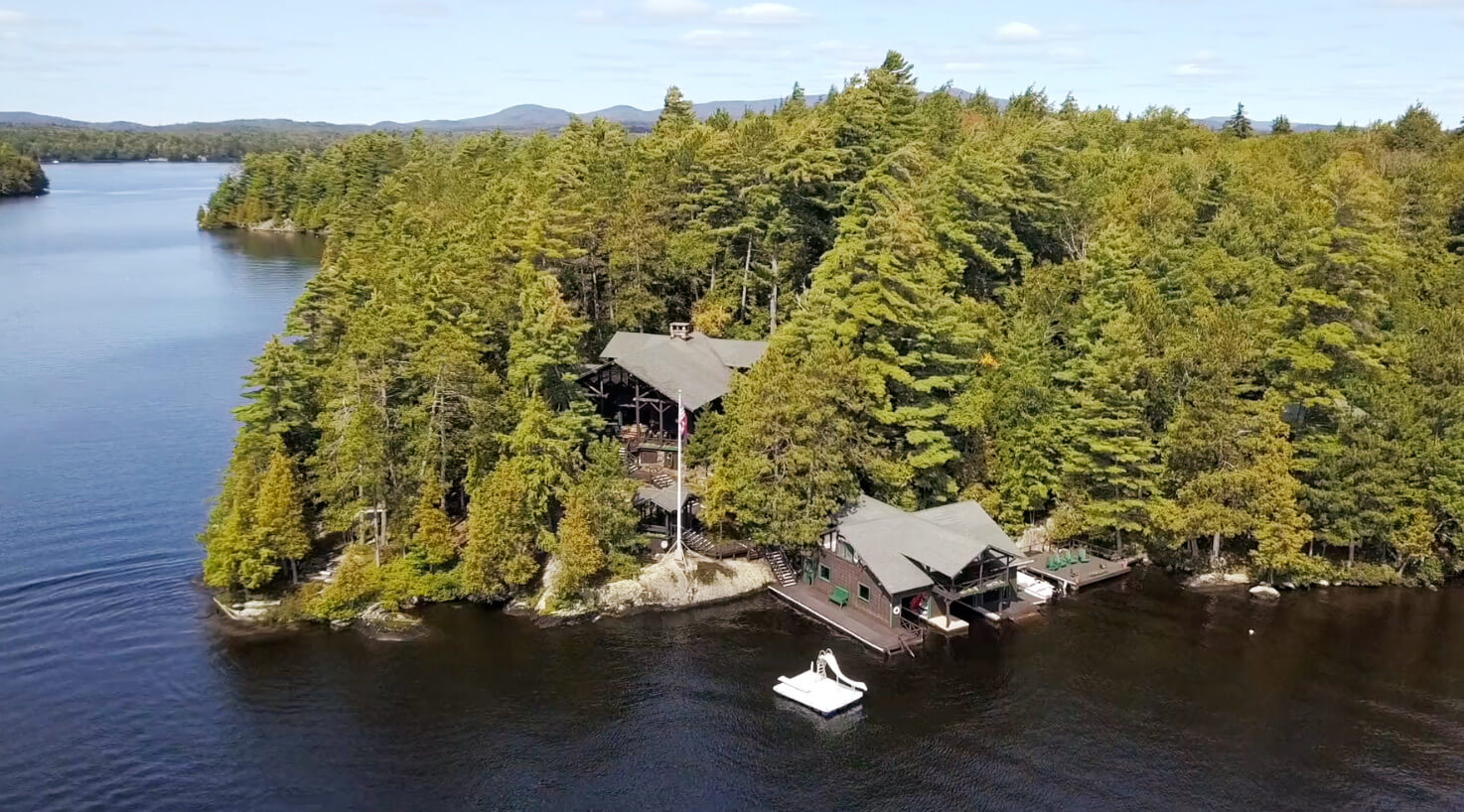
Many of the camps were built along the shorelines of legendary Adirondack lakes including Upper Saranac Lake, Upper St. Regis Lake, Lake Placid, Raquette Lake, and Blue Mountain Lake. Rather than dominating the landscape, the architecture embraced it. Buildings were often connected by covered walkways, positioned to capture lake breezes and mountain views, and carefully integrated into the natural topography.
The Great Camps also helped shape the conservation history of the Adirondacks. Large tracts of protected shoreline, forests, and undeveloped land remain intact today in part because these estates valued privacy, preservation, and low-density development long before modern environmental planning became common practice.
Merrill L. Thomas, Inc. and the Adirondack Great Camps
Over the years, Merrill L. Thomas, Inc. has represented and sold many of the Adirondacks’ most recognized camps and legacy properties. These sales represent not only real estate transactions, but also the transfer of stewardship for some of the Park’s most historic compounds.
A cross-section of notable Adirondack camp properties represented by Merrill L. Thomas, Inc. includes:
- Camp Topridge, once owned by Marjorie Merriweather Post
- Camp Joyland, associated with Victor Herbert
- Camp Sunshine, formerly owned by Kate Smith
- Camp Togus, associated with Mary Lou Whitney
- Cheery Lodge in Lake Placid
- Camp Carolina in Lake Placid
- Dexter Lake in St. Regis Falls
- Wenonah Lodge on Upper Saranac Lake
- Green Bay Camp on Upper Saranac Lake
- Camp Katia on Upper St. Regis Lake
- Camp Gordon in Lake Placid
- Hillgarth in Lake Placid
- The Hedges on Blue Mountain Lake
- Bottle Bay Camp on Upper Saranac Lake
- Camp Solitude in Lake Placid
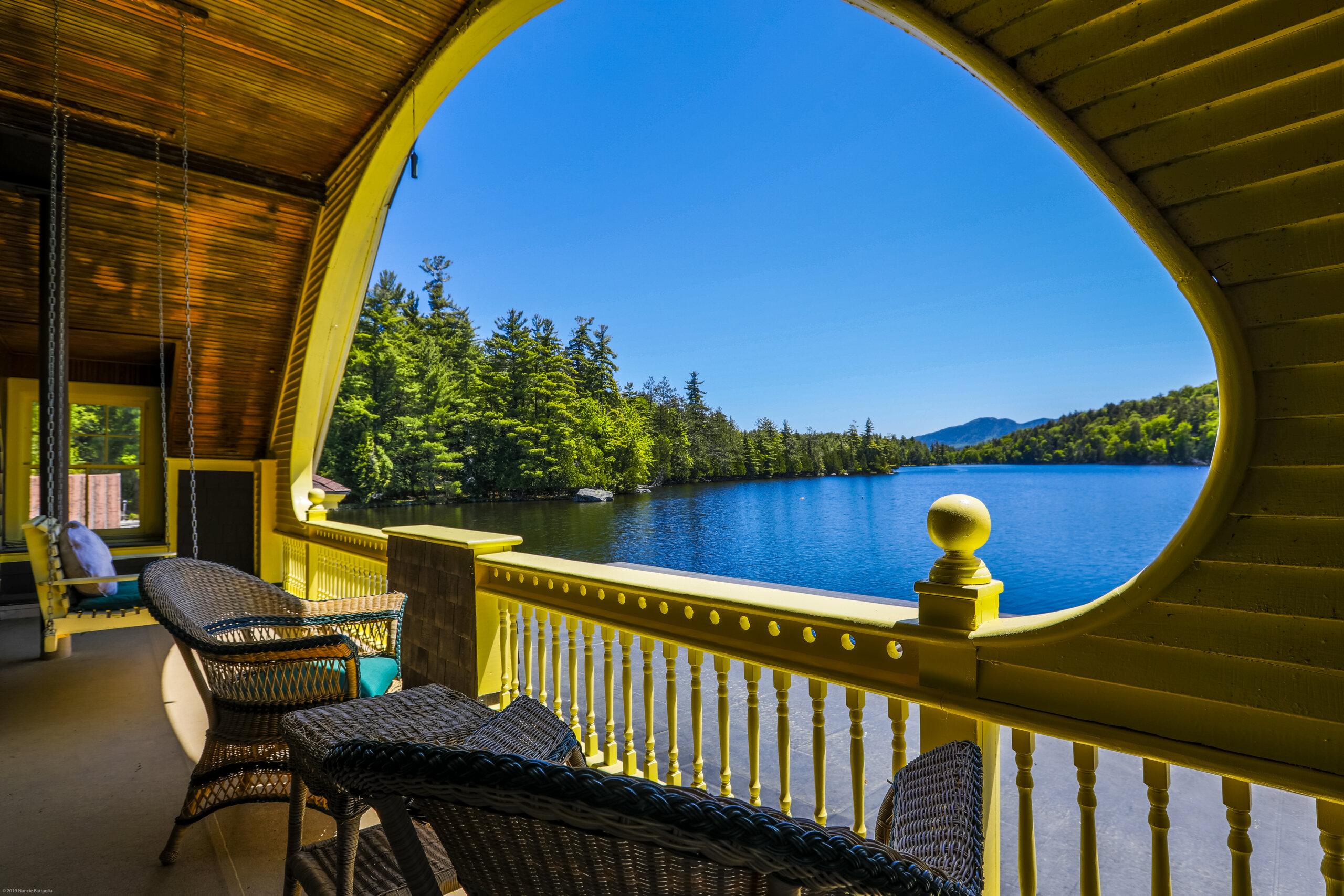
Adirondack great camps
Preservation
The continued preservation of Adirondack Great Camps is important not only for the real estate market, but also for the cultural identity of the Adirondack Park itself. These compounds reflect a unique era of American architecture and wilderness conservation that cannot be recreated. At Merrill L. Thomas, Inc., the appreciation for Adirondack history, waterfront land, and legacy properties remains deeply rooted in the firm’s identity. With decades of experience representing some of the region’s most significant camps and estates, the company continues to help connect buyers and sellers who understand the long-term value and stewardship these extraordinary properties represent. For many families, owning an Adirondack camp is not simply about purchasing real estate. It is about becoming part of the history of the Adirondack Park itself.
The Enduring Appeal of Adirondack Camps
Today, interest in Adirondack Great Camps continues to remain strong among buyers seeking privacy, authenticity, waterfront access, and multigenerational compounds. In many ways, the lifestyle these camps were originally designed for has become even more desirable in modern times.
Buyers are increasingly drawn to:
- Large private waterfront acreage
- Historic craftsmanship and patina
- Boathouses and shoreline compounds
- Family gathering spaces
- Direct access to lakes, trails, and wilderness
- Properties with architectural and historical significance
Unlike many modern luxury homes, Adirondack camps often tell a story through their materials, design, and setting. The hand-built nature of these compounds, combined with their irreplaceable locations, creates a level of character that is difficult to replicate today.
Our Professionals
Our strength lies in the success of our associates who form the cornerstone of our business. We total some 35 professional agents including 16 designated brokers. Each agent has an outstanding reputation and maintains a consistent presence in the real estate business. Each is skilled in all aspects of the profession from marketing to financing, negotiations to closings. We are confident that any of our salespeople will meet your real estate needs.
Adirondack Great Camps FAQs
The Adirondack Great Camps are among the most storied properties in the Park, and buyers often have questions before they ever look at a listing. Below, we’ve answered what we’re asked most often about their history, availability, and how to see one for yourself.
Adirondack Great Camps are historic wilderness compounds built primarily in the late 1800s and early 1900s by prominent families, industrialists, and public figures as retreats from city life. Constructed from native stone, hand-hewn timber, and cedar bark, they were designed to blend rustic craftsmanship with the surrounding lakes and forests, and many remain some of the most architecturally significant properties in the Adirondack Park today.
There’s no single official list, since many were built as private family compounds rather than public landmarks, but well-known examples include Camp Topridge, Camp Sunshine, Camp Santanoni, and Camp Pine Knot, along with dozens of lesser-known camps built along lakes like Upper Saranac Lake, Upper St. Regis Lake, and Raquette Lake. Merrill L. Thomas has represented a number of these historic properties over the decades, including Camp Topridge, Camp Joyland, and Camp Sunshine.
Camp Santanoni is one of the most well-known Adirondack Great Camps, built in the 1890s near Newcomb for the Pruyn family. Unlike many of the camps Merrill L. Thomas has represented, Santanoni is now owned by New York State and preserved as a historic site rather than a private residence, and it’s open to visitors via a roughly 5-mile trail into the property. It’s a great example of the architectural style that defines the Great Camp era, even though it’s not on the market.
Yes, though they come to market infrequently given how few exist and how rarely they change hands. Merrill L. Thomas maintains relationships throughout the region that give buyers access to these properties, including opportunities that aren’t always publicly listed. View our current Great Camp listings or contact our office to hear about upcoming or off-market opportunities.
A few Great Camps are open to the public, most notably Camp Santanoni, which offers seasonal guided tours and public trail access through the Adirondack Architectural Heritage organization. Most Great Camps, however, remain private residences, and the best way to experience one firsthand is often through a private showing with a local agent familiar with the property’s history.
Great Camps are concentrated around the region’s original resort lakes, particularly Upper Saranac Lake, Upper St. Regis Lake, Lake Placid, Raquette Lake, and Blue Mountain Lake — lakes that were favored by the wealthy families who built these compounds a century ago for their privacy and remote access.
Scale, history, and craftsmanship set Great Camps apart from a standard Adirondack cabin. A cabin is typically a single structure built for seasonal use, while a Great Camp is a compound — multiple connected buildings, often including a main lodge, guest cottages, and a boathouse, built specifically to accommodate extended family and guests for entire summers.