Bytes.co Burlington
Buying an Adirondack cabin or camp is rarely just about square footage, bedroom count, or the age of the kitchen. The setting, access, utilities, land, shoreline, and seasonal demands can all have a significant effect on how you use the property and how much work it requires over time.
A camp that looks ideal in listing photos may feel very different once you consider the steep driveway, aging septic system, limited winter access, or distance from essential services. Conversely, a property that appears modest at first may offer exceptional privacy, a well-maintained structure, dependable utilities, and a setting that would be difficult to recreate.
That does not mean buyers should approach every camp with suspicion. It simply means that Adirondack properties deserve a thoughtful evaluation. Understanding the practical details can help you separate manageable projects from concerns that could change the way you feel about the purchase.
As you begin your search, explore the current selection of ADK cabins and camps from Merrill L. Thomas, Inc. Then keep the following 25 considerations in mind as you compare properties and schedule showings.
Start With the Structure
A memorable view can make it easy to overlook the building itself. Before focusing on furnishings, décor, or cosmetic updates, take time to understand the condition of the cabin’s most important structural components.
Older camps are not necessarily problematic. Many have been carefully maintained for generations and possess craftsmanship and character that would be difficult to duplicate today. The goal is not to avoid age, but to understand how the structure has been cared for and what it may require in the years ahead.
1. Roof Age and Condition
The roof is one of the first major components to evaluate because it protects everything beneath it. Ask when it was installed, what materials were used, and whether any repairs have been completed recently.
From the ground, look for missing or curling shingles, uneven rooflines, moss growth, staining, or areas where water may collect. Inside the camp, inspect ceilings and upper walls for discoloration or evidence of past leaks.
A roof that is approaching the end of its useful life may not be a reason to walk away, but it should be understood before you make an offer.
2. Foundation Stability
Adirondack camps may sit on full foundations, crawlspaces, piers, slabs, or combinations of these systems. Each can perform well when properly designed and maintained, but buyers should look carefully for signs of movement or moisture.
Cracks, uneven floors, doors that do not close properly, or visible settling may warrant closer investigation. In crawlspaces and basements, pay attention to standing water, dampness, damaged supports, and signs that previous repairs have been made.
The terrain around the camp also matters. Water should move away from the foundation rather than collecting beside it.
3. Signs of Moisture Intrusion
Water is one of the most common sources of damage in any home, and seasonal camps can be especially vulnerable when they sit unoccupied for extended periods.
Musty odors, stained ceilings, peeling paint, warped flooring, and discoloration around windows may indicate current or previous moisture problems. Check beneath sinks, around tubs and showers, near chimneys, and along exterior walls.
Not every stain signals an active problem. The important questions are where the water came from, whether the source was repaired, and whether any resulting damage was properly addressed.
4. Exterior Siding and Trim
The exterior should protect the camp from wind, rain, snow, and temperature changes. Walk around the entire structure and look for rotting wood, damaged siding, peeling finishes, gaps, or areas where vegetation is touching the building.
Pay particular attention to trim around windows, doors, rooflines, and decks. These areas are often the first places where water finds its way into a structure.
Ask how frequently the exterior requires staining, painting, sealing, or other maintenance. A rustic appearance can be appealing, but it should not be confused with deferred upkeep.
5. Windows and Doors
Windows and exterior doors influence comfort, energy efficiency, security, and the ability to use a camp throughout the year.
Open and close as many as possible during the showing. Check whether they stick, whether locks function, and whether there are drafts or visible gaps. Condensation between panes can indicate a failed seal, while soft wood around frames may suggest moisture damage.
For a seasonal camp, older windows may be perfectly acceptable. For a property you expect to use during the winter, their condition may have a much greater effect on heating costs and comfort.
6. Decks, Porches, Stairs, and Railings
Outdoor spaces are often among the most enjoyable parts of an Adirondack camp, but they are also exposed to snow, rain, ice, and changing temperatures.
Walk carefully across decks and porches, noting any movement, soft boards, uneven surfaces, or damaged supports. Look beneath elevated structures when possible and check whether railings and stairs feel secure.
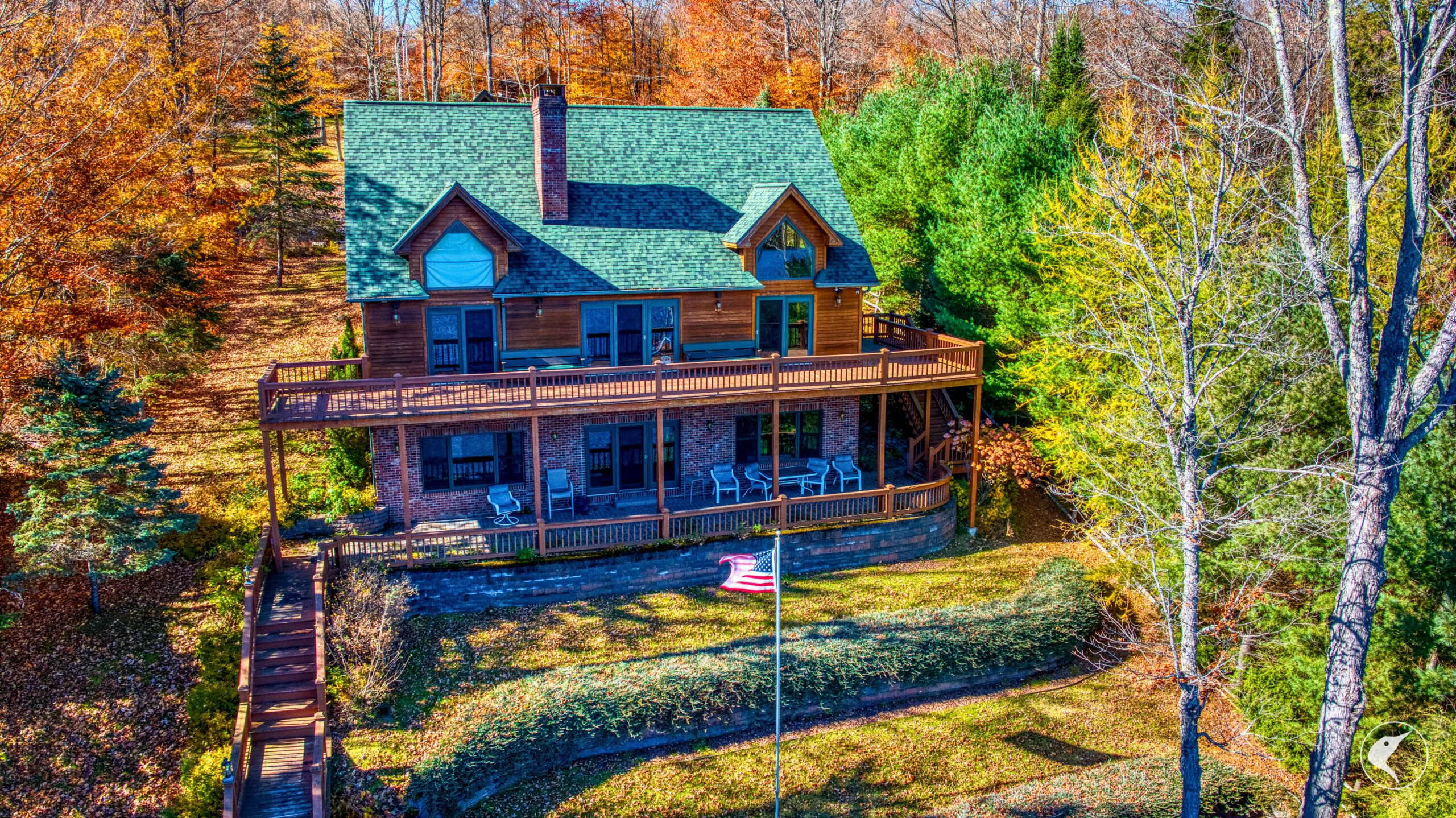
These areas can often be repaired or replaced, but their condition should be part of your overall assessment—especially if the camp is built on a slope or the deck serves as a primary entrance.
7. Chimneys, Fireplaces, and Wood Stoves
A fireplace or wood stove can add warmth and atmosphere, but it also needs to be safe and properly maintained.
Ask when the chimney was last inspected or cleaned. Look for cracks, staining, damaged masonry, missing components, or signs of water entering around the chimney. Confirm whether the stove or fireplace is regularly used and whether maintenance records are available.
A professional inspection is often appropriate before relying on any solid-fuel heating system.
8. Evidence of Pests or Wildlife
Remote and seasonal properties may occasionally attract mice, squirrels, bats, insects, or other wildlife. The issue is not merely whether an animal has ever entered the camp, but whether there is an ongoing problem or structural damage.
Look for droppings, nesting material, chewed wiring, damaged insulation, small openings around the foundation, and gaps near the roofline. Ask whether the owners use a pest-control service or take seasonal steps to secure the property.
Evidence of wildlife does not automatically make a camp unsuitable, but it can reveal maintenance needs that may not be obvious at first glance.
Understand the Camp’s Essential Systems
Private infrastructure is common throughout the Adirondacks. Instead of assuming that utilities function like those in a conventional neighborhood, ask how each system works, who maintains it, and when it was last evaluated.
The answers can influence not only future expenses but also whether the property is appropriate for seasonal visits, extended stays, or year-round living.
9. The Water Source
Determine whether the camp is served by a drilled well, dug well, spring, lake-drawn system, shared source, or municipal water.
Ask whether the water has been tested recently and whether there have been concerns about quality, pressure, flow, or seasonal reliability. Find out where the source is located and what equipment is used to bring water into the home.
Some systems are well suited to year-round use, while others require winterization or additional treatment. Understanding the source is more important than making assumptions based on water pressure at a single showing.
10. The Septic System
Private septic systems are common at Adirondack camps, and their condition deserves careful attention.
Ask when the system was installed, when it was last pumped, and whether records or plans are available. Find out where the tank and absorption area are located, particularly if you are considering future additions, a garage, or changes to the landscape.
Slow drains, sewage odors, wet areas in the yard, or unusually lush patches of grass may warrant further evaluation. A qualified professional can provide more meaningful information than a visual inspection alone.
11. The Heating System
The appropriate heating system depends heavily on how the property is used. A camp occupied only in summer has very different needs from a cabin that will host winter weekends or serve as a full-time residence.
Ask about the primary heat source, fuel type, age of the equipment, service history, and average fuel usage. Determine whether the system heats the entire camp evenly and whether any rooms rely on supplemental heat.
Wood stoves, propane systems, electric baseboards, boilers, furnaces, and heat pumps all have different operating considerations. The best system is the one that safely supports your intended use.
12. Plumbing and Winterization
In a seasonal camp, find out how the plumbing is protected when temperatures drop. Some owners drain the entire system each fall, while others keep the property heated or use specialized winterization procedures.
Ask where the main shutoff is located, whether pipes are insulated, and whether there has ever been freeze damage. Check exposed plumbing in crawlspaces, under sinks, and near exterior walls.
A reliable winterization routine can make seasonal ownership straightforward. An unclear or inconsistent process may lead to expensive repairs.
13. Electrical Capacity and Condition
Older camps may have electrical systems that were installed for a simpler level of use. Modern appliances, remote-work equipment, heating systems, generators, and electric vehicle charging can place very different demands on a property.
Ask about the size and age of the electrical service, the condition of the panel, and whether major upgrades have been completed. Look for exposed wiring, overloaded outlets, extension cords being used as permanent solutions, or outdated components.
A licensed electrician can help determine whether the system is safe and whether it can support your plans for the property.
14. Internet and Cellular Service
Connectivity may not matter to every buyer, but it has become increasingly important for remote work, streaming, security systems, and communication.
Do not rely solely on a coverage map. Test your phone in several areas of the camp and ask what service the current owners use. Find out whether cable, fiber, DSL, satellite, or fixed wireless internet is available.
A property can still be an ideal retreat without strong connectivity. The key is knowing what to expect before you purchase it.
Evaluate the Land and Access
The surrounding property is not simply a backdrop. It affects privacy, maintenance, drainage, recreation, expansion possibilities, and how easily you can reach the camp throughout the year.
Buyers seeking more acreage may also want to review current Adirondack land listings to understand how location, terrain, access, and development potential vary across the region.
15. Road Ownership and Maintenance
Determine whether the road is public, private, shared, or seasonal. If it is private, ask who maintains it, how expenses are divided, and whether there is a written agreement.
Find out who handles grading, drainage, repairs, and snow removal. A road that is easy to travel in July may be muddy during spring thaw or difficult to navigate after a winter storm.
Road maintenance arrangements should be understood clearly, particularly when multiple property owners share access.
16. Driveway Grade and Condition
The final approach to the camp can be just as important as the road leading to it.
Consider the driveway’s slope, width, surface, drainage, and available turning space. Ask whether standard vehicles can reach the property in all seasons and whether plowing becomes difficult during periods of heavy snow.
A steep or narrow driveway may be manageable for some owners and inconvenient for others. Think about guests, contractors, fuel deliveries, emergency access, and your own comfort level.
17. Drainage and Wet Areas
Walk the land and observe how water appears to move across it. Low spots, standing water, erosion channels, damaged culverts, or saturated ground can point to drainage challenges.
Conditions may look very different depending on the season, so ask what the property is like during spring snowmelt and after prolonged rain. If the showing takes place during dry weather, look for water lines, exposed roots, washed-out soil, or vegetation associated with consistently wet ground.
Good drainage protects the camp, driveway, septic system, and outdoor living areas.
18. Property Boundaries and Surveys
Wooded acreage can make boundaries difficult to identify without a survey. Do not assume that a stone wall, trail, fence, or line of trees marks the legal edge of the property.
Ask whether a current survey is available and whether boundary markers can be located. Understand where the camp, driveway, septic system, well, outbuildings, and shoreline sit in relation to the property lines.
This is especially important if you hope to add a structure, improve a trail, create more parking, or preserve a particular view.
19. Easements and Shared Features
Some Adirondack properties include rights-of-way, shared driveways, common waterfront access, utility easements, or agreements involving neighboring landowners.
Ask what rights others may have to cross or use the property and what rights the owner receives in return. Clarify maintenance obligations and whether written agreements are recorded.
Shared arrangements can work very well, but buyers should understand them before closing rather than relying on informal traditions or assumptions.
20. Trees Near the Camp
Mature trees contribute enormously to the beauty and privacy of a wooded camp. They can also create maintenance concerns when limbs hang over the roof, roots affect structures, or aging trees stand close to buildings and utilities.
Look for dead branches, leaning trunks, damaged bark, exposed roots, or signs of disease. Consider how much sunlight reaches the camp and whether dense vegetation contributes to moisture or limits views.
Tree work in a remote location can be more involved than routine landscaping, so it is useful to understand what may be required.
Look Closely at Waterfront Features
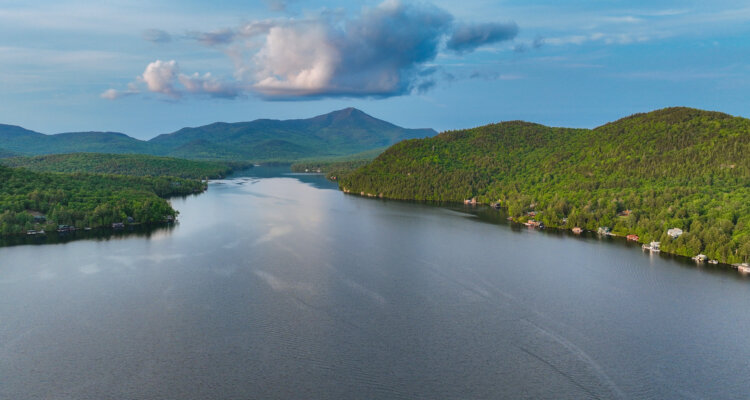
For buyers considering Adirondack waterfront property, the shoreline deserves as much attention as the cabin. Two properties on the same lake can offer very different experiences depending on water depth, exposure, access, and the character of the waterfront.
Spend time at the water’s edge. The view from the living room is important, but it does not tell you everything about swimming, docking, boating, privacy, or long-term maintenance.
21. Shoreline Character and Access
Consider whether the shoreline is sandy, rocky, steep, level, marshy, or protected by vegetation. Look at how easily people of different ages and abilities can move between the camp and the water.
A dramatic elevated view may come with a long staircase. A level shoreline may be more convenient but offer less privacy. Neither is inherently preferable; the right fit depends on how you expect to use the property.
Also ask whether the shoreline changes meaningfully with seasonal water levels.
22. Water Depth and Swimming Conditions
Waterfront does not always mean ideal swimming or docking.
Ask about depth at the shoreline and at the end of the dock. Look for weeds, rocks, soft bottom conditions, currents, boat traffic, and exposure to prevailing winds. Find out whether water levels fluctuate and whether the waterfront remains usable throughout the season.
Families with young children may prefer gradual entry, while boat owners may need deeper water. Paddlers may value a quiet cove more than open water.
23. Docks, Boathouses, and Waterfront Structures
Inspect docks, boathouses, stairs, retaining walls, and other shoreline features with the same care you would give the cabin.
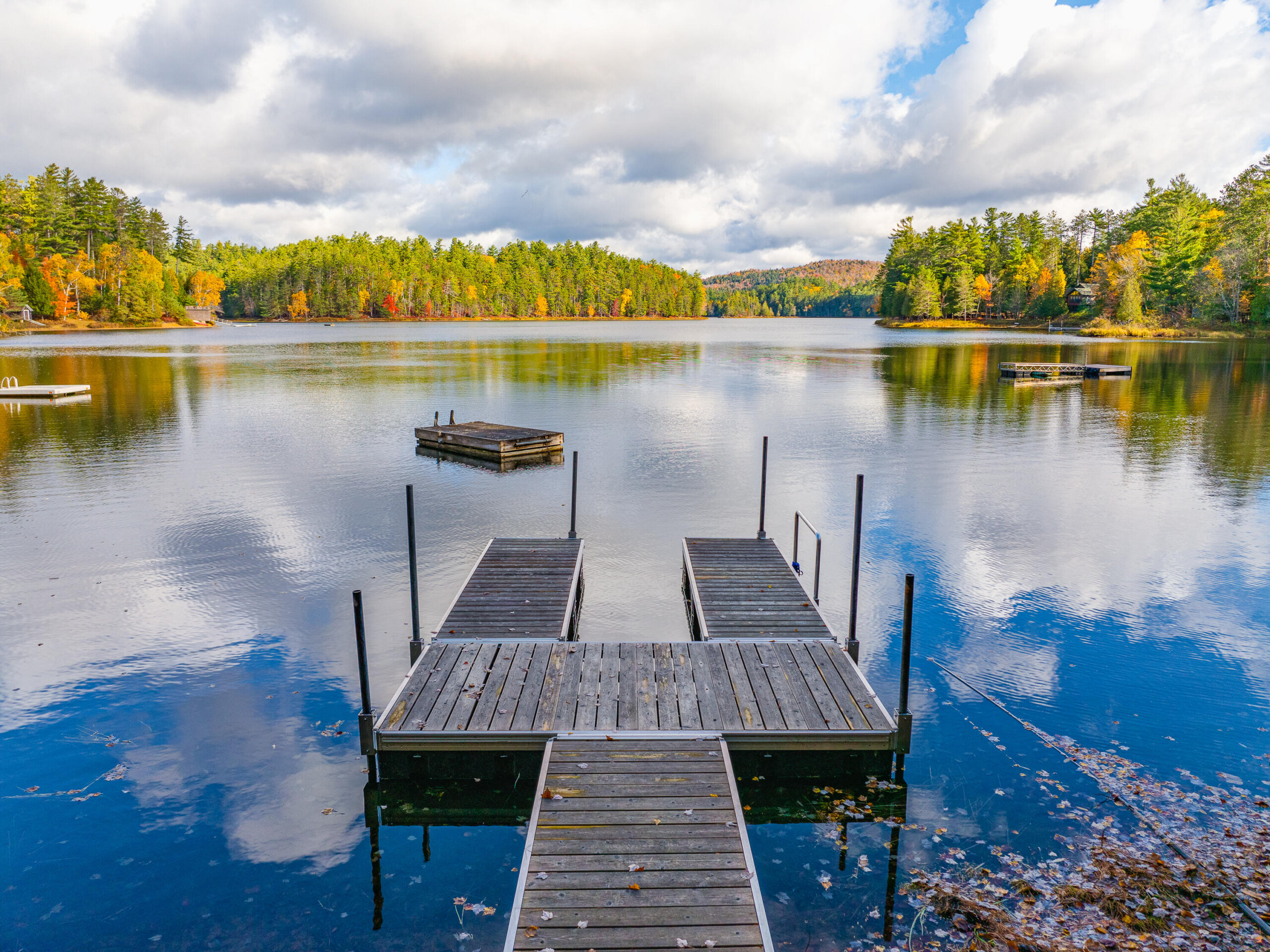
Ask about age, ownership, seasonal installation and removal, repairs, and any available documentation. Determine whether structures are fixed, floating, shared, or subject to specific maintenance arrangements.
Existing waterfront improvements can add considerable enjoyment, but they may also require regular upkeep and seasonal labor.
Consider How the Property Fits Your Life
The physical condition of a camp matters, but so does the way the property fits into your everyday routines, family plans, and expectations for ownership.
The Adirondacks encompass many distinct destinations. Browsing the site’s Adirondack town and community pages can help you compare the character, amenities, and recreational opportunities of different locations before narrowing your search.
24. Distance From Services and Recreation
A remote camp can offer exceptional peace and privacy, but everyday errands may require more planning. Consider the distance to groceries, fuel, medical care, hardware stores, restaurants, and other services you expect to use.
Also think about the recreational activities that brought you to the Adirondacks. A property near Lake Placid may appeal to buyers who value skiing, dining, events, and village amenities. Saranac Lake offers its own combination of community life, arts, waterways, and outdoor access, while Tupper Lake attracts buyers drawn to expansive lakes, natural surroundings, and a strong sense of place.
The right location is not necessarily the most famous or the most secluded. It is the one that supports the way you want to spend your time.
25. The Overall Feeling of the Property
After evaluating roofs, utilities, boundaries, roads, trees, and shorelines, make room for one less technical question: How does the property feel?
Can you picture arriving after a long drive and immediately relaxing? Does the setting provide the privacy, recreation, convenience, or sense of connection you hoped to find? Are the property’s compromises manageable, or would they repeatedly interfere with your enjoyment?
No camp will check every possible box. One may offer exceptional waterfront but less interior space. Another may sit on beautiful acreage but require a longer drive to town. A third may need updates yet occupy a location that would be nearly impossible to duplicate.
The best choice is usually not the property with the fewest imperfections. It is the property whose strengths matter most to you and whose limitations you fully understand.
Take a Thoughtful Approach to Your Adirondack Camp Search
A thorough showing is the beginning of the evaluation process, not the end. Inspections, surveys, water testing, septic assessments, title review, and other professional guidance may be appropriate depending on the property. Your real estate agent can help you identify the questions to ask and the specialists who may need to become involved.
Most importantly, avoid allowing a single feature—whether it is a panoramic view, a charming stone fireplace, or an inviting dock—to make the entire decision. The most satisfying camp purchases combine an appealing setting with access, systems, maintenance needs, and ownership responsibilities that fit the buyer’s plans.
When you are ready to compare available properties, browse current ADK cabin and camp listings. For buyers focused on direct lake or river access, Merrill L. Thomas, Inc. also maintains a dedicated collection of waterfront homes and camps throughout the Adirondacks.
Our licensed real estate professionals can help you evaluate communities, arrange showings, and better understand the characteristics that make each Adirondack property unique.
Related Topics:
Camps & Cabins